Crate training is an essential aspect of puppy care, providing a safe, comfortable space for your new furry friend and aiding in housebreaking. However, the key to successful crate training lies in creating and maintaining an effective schedule. This comprehensive guide will walk you through the process of developing a crate schedule that aligns with your puppy’s needs, promoting positive behavior and a smooth training process.
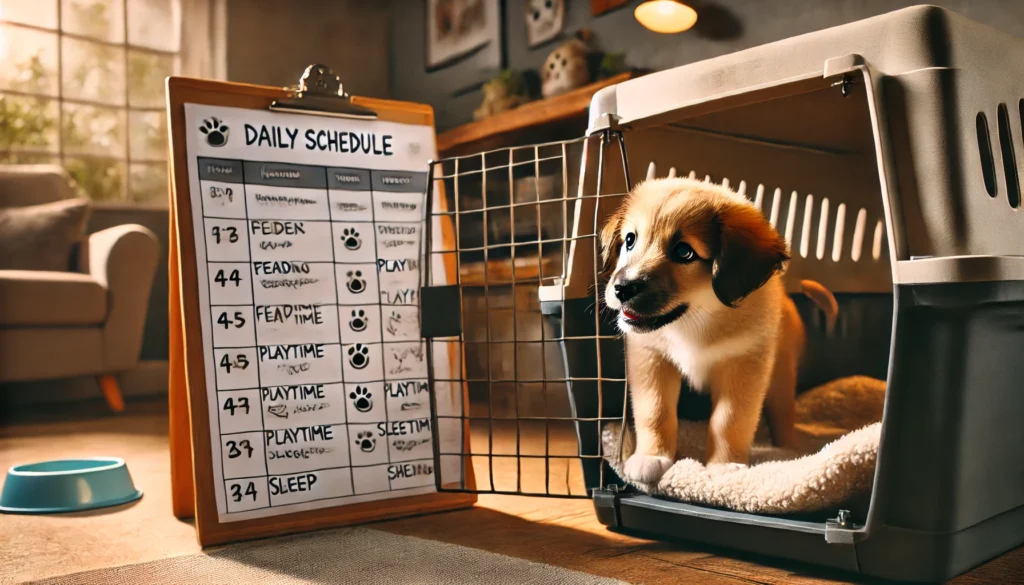
A puppy contentedly entering its crate, with a visible schedule chart
Understanding the Importance of a Crate Schedule
Before diving into the specifics of creating a schedule, it’s crucial to understand why a consistent crate routine is so important:
Predictability: A regular schedule helps your puppy understand what to expect, reducing anxiety and confusion.
Bladder Control: Consistent crating and potty breaks help your puppy develop better bladder control.
Behavior Management: Regular crate time can prevent destructive behavior when you can’t supervise your puppy.
Sleep Regulation: A schedule helps establish healthy sleep patterns for your growing puppy.
Easier Transitions: A well-crate-trained puppy often adapts more easily to new situations or environments.
Components of a Crate Schedule
An effective crate schedule should include several key components:
1. Feeding Times
Establishing regular feeding times is crucial for several reasons:
It helps regulate your puppy’s digestive system.
It makes potty training more predictable.
It allows you to monitor your puppy’s health and appetite.
Tips for Feeding Schedule:
Feed puppies under 6 months old 3-4 times a day.
For puppies over 6 months, transition to 2-3 meals a day.
Avoid feeding right before crate time to prevent accidents.
2. Potty Breaks
Frequent, consistent potty breaks are essential for successful housebreaking:
Take your puppy out immediately after waking up, after meals, and after play sessions.
Use a consistent command (like “go potty”) and praise successful elimination.
Potty Break Frequency Guide:
8-10 weeks old: Every 30-60 minutes
11-14 weeks old: Every 1-2 hours
15-16 weeks old: Every 2-3 hours
17+ weeks old: Every 3-4 hours
3. Playtime and Exercise
Regular playtime and exercise are crucial for your puppy’s physical and mental well-being:
Include short play sessions throughout the day.
Incorporate training exercises during playtime.
Ensure your puppy gets enough exercise before longer crate periods.
4. Nap Times
Puppies need plenty of sleep for healthy growth and development:
Most puppies need 18-20 hours of sleep per day.
Schedule several nap times throughout the day.
Use the crate for naps to reinforce it as a safe, restful space.
5. Training Sessions
Incorporate short training sessions into your daily schedule:
Keep sessions brief (5-10 minutes) but frequent.
Use positive reinforcement techniques.
Gradually increase the difficulty of training as your puppy progresses.
Sample Crate Schedules
Here are sample schedules for puppies at different ages. Remember, these are guidelines and should be adjusted based on your puppy’s individual needs and your personal schedule.
For an 8-Week-Old Puppy
Time
Activity
6:00 AM
Wake up, potty break
6:15 AM
Playtime and training
6:45 AM
Breakfast
7:00 AM
Potty break
7:15 AM
Playtime
7:45 AM
Nap in crate
9:45 AM
Potty break
10:00 AM
Playtime and training
10:30 AM
Nap in crate
12:00 PM
Potty break
12:15 PM
Lunch
12:30 PM
Potty break
12:45 PM
Playtime
1:15 PM
Nap in crate
3:15 PM
Potty break
3:30 PM
Playtime and training
4:00 PM
Nap in crate
6:00 PM
Potty break
6:15 PM
Dinner
6:30 PM
Potty break
6:45 PM
Playtime
7:15 PM
Quiet time
8:00 PM
Last potty break
8:15 PM
Bedtime in crate
11:00 PM
Quick potty break
2:00 AM
Quick potty break
5:00 AM
Quick potty break
For a 16-Week-Old Puppy
Time Activity 6:30 AM Wake up, potty break 6:45 AM Playtime and training 7:15 AM Breakfast 7:30 AM Potty break 7:45 AM Playtime 8:15 AM Nap in crate 10:15 AM Potty break 10:30 AM Playtime and training 11:00 AM Nap in crate 1:00 PM Potty break 1:15 PM Lunch 1:30 PM Potty break 1:45 PM Playtime 2:15 PM Nap in crate 4:15 PM Potty break 4:30 PM Playtime and training 5:00 PM Nap in crate 6:30 PM Potty break 6:45 PM Dinner 7:00 PM Potty break 7:15 PM Playtime 7:45 PM Quiet time 8:30 PM Last potty break
Adjusting the Schedule as Your Puppy Grows
As your puppy matures, their crate schedule will need to evolve. Here are some tips for adjusting the schedule:
Extending Crate Time
Gradually increase the duration of crate periods as your puppy’s bladder control improves.
By 6 months of age, most puppies can stay in their crate for up to 6 hours during the day.
Reducing Feeding Frequency
As your puppy approaches adulthood (around 6-12 months, depending on breed), you can transition to feeding twice a day.
Adjust the schedule to accommodate these meal times.
Nighttime Schedule
Most puppies can sleep through the night without a potty break by 4-5 months of age.
Gradually phase out nighttime potty breaks as your puppy demonstrates the ability to hold it longer.
Troubleshooting Common Crate Schedule Issues
Even with a well-planned schedule, you may encounter some challenges:
Whining or Barking in the Crate
Ensure all needs (potty, food, water) are met before crate time.
Avoid rewarding the behavior by letting the puppy out when they whine.
If the behavior persists, reassess your schedule – your puppy may need more exercise or mental stimulation.
Accidents in the Crate
Review your potty break schedule – you may need to increase frequency.
Ensure the crate is the right size – too large, and the puppy may use one end as a bathroom.
Clean accidents thoroughly with an enzymatic cleaner to remove odors.
Resistance to Entering the Crate
Make the crate more appealing with comfortable bedding and safe toys.
Practice crate games and positive reinforcement to create good associations.
Never force your puppy into the crate – this can create negative associations.
Conclusion
Creating and maintaining an effective crate schedule is a crucial part of raising a well-adjusted puppy. Remember, the schedule provided is a guideline – every puppy is unique, and you may need to adjust based on your puppy’s individual needs and your lifestyle.
Consistency is key in crate training. Stick to your schedule as much as possible, but also be prepared to make adjustments as your puppy grows and develops. With patience and persistence, your puppy will come to view their crate as a safe, comfortable space, making life easier for both of you.
Always monitor your puppy’s behavior and health. If you notice any concerning changes or if you’re struggling with crate training, don’t hesitate to consult with your veterinarian or a professional dog trainer. They can provide personalized advice to ensure your puppy’s crate experience is positive and beneficial.
Remember, the effort you put into crate training now will pay off in a well-behaved, confident adult dog in the future. Happy training!
adult dog voluntarily entering or resting in their crate, symbolizing successful long-term crate training
Almost every puppy owner has faced the challenge of a puppy whining in its crate at night. It can be tough to handle, but with the right tips and a bit of patience, you can help your puppy settle down for a peaceful night. This article will guide you through creating a cozy crate environment,…
Making your own dog food at home can be a fun and rewarding experience. Not only do you get to control what goes into your dog’s meals, but you can also ensure they are getting the best nutrition possible. With the right ingredients and some simple recipes, you can whip up delicious and healthy meals…
As dogs grow older, their nutritional needs change. You can’t feed an older dog the same food you gave them as a puppy. Senior dogs need a special diet to stay healthy in their golden years. This guide will help you understand what to feed your aging pup to keep them happy and healthy. 1….
Welcome to our comprehensive guide on the best products for quiet puppies. As pet owners, we understand the importance of creating a calm and peaceful environment for our furry friends. In this article, we will explore essential puppy training essentials, including calming treats, engaging toys, and quiet ears for dogs. Puppyhood can be a stressful…
German Shepherd nutrition is a crucial aspect of caring for these loyal and intelligent dogs. As the second most popular pet in America, German Shepherds require a carefully planned diet to maintain their health and vitality. We’ll explore the best diet plans for German Shepherds, focusing on their unique nutritional needs and how to provide…
Welcome to our guide on quiet puppy food, where we explore the benefits of nourishing your puppy with organic, grain-free, and natural puppy food. As responsible pet owners, we understand the importance of providing our furry friends with nutritious meals that support their overall health and well-being. Did you know that there are specific ingredients…



3 Comments